Strength & Conditioning Coach
in West London

IntroDUCTION
Most personal trainers can make you tired. Fewer can make you better at your sport.
Strength and conditioning is a different discipline. Programming built around what your sport actually demands, structured across a season, and adjusted as that season changes. The difference between training hard and training for something.
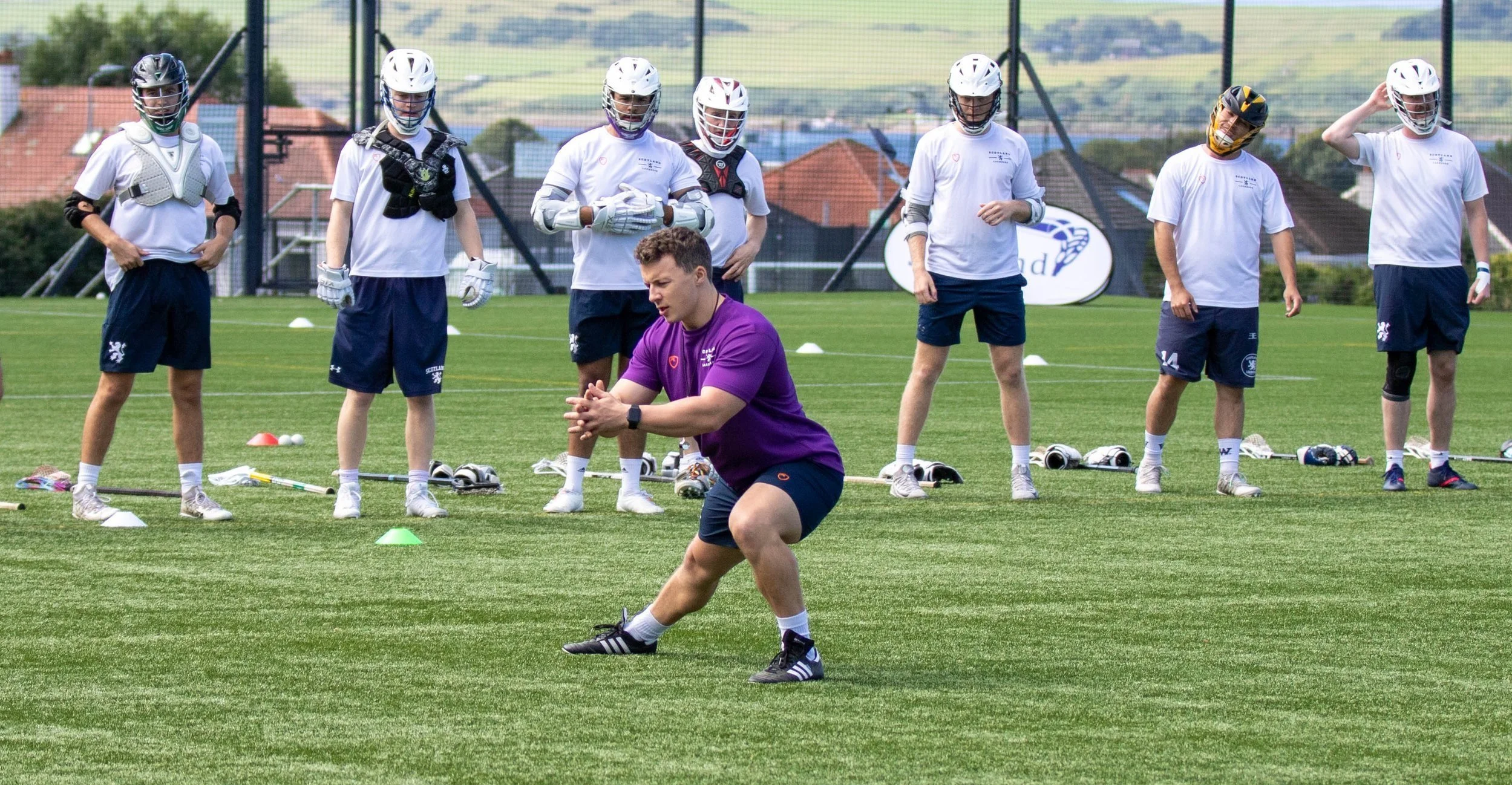
I've spent ten years doing this at club and national level, including as strength and conditioning coach to the Scotland men's lacrosse squad. The same approach is available to anyone in West London - whether you're competing internationally or you'd just like to stop breaking down every season.
What strength and conditioning actually involves
It starts with testing, not a programme.
How you move, where you're restricted, what's asymmetrical, and what your sport is going to demand of all that. A programme written before any of that is a guess dressed up as a plan.
It’s STRUCTURED
What you do in the off-season isn't what you do six weeks out from competition, and neither resembles what you do mid-season when matches are taking most of your recovery. Programming that ignores the calendar either leaves performance on the table or leaves you flat when it matters.
It's SPECIFIC
A cyclist, a football player and a golfer need different things. Speed, power, strength and endurance all compete for the same recovery capacity; you can't maximise four at once, so the balance has to reflect your sport and the time of year.
It accounts for injury risk
The most valuable thing S&C does for most athletes is keep them available. It's also the hardest outcome to notice, because success looks like nothing happening.
Testing:
How we know it’s working
Most training gets judged on how it felt. That isn't good enough when you're trying to peak for a season.
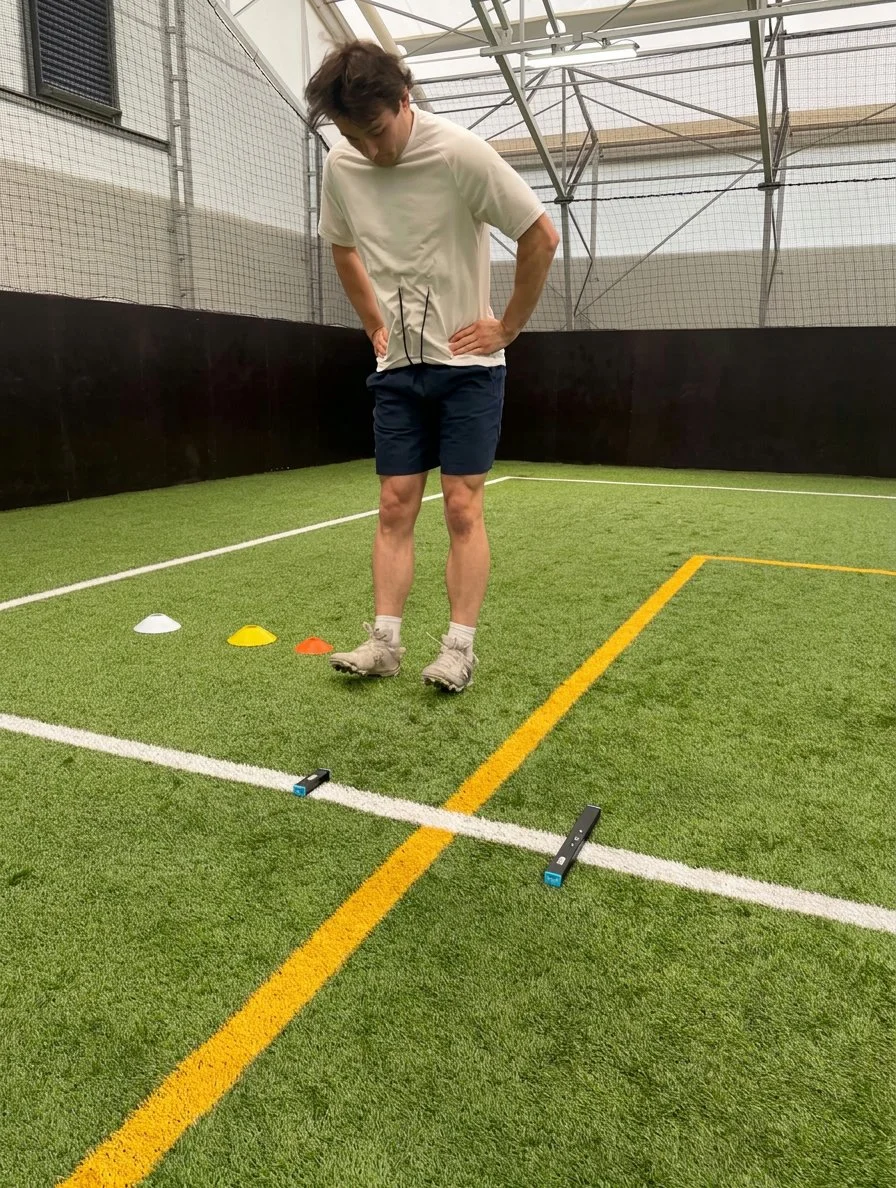
What we test depends on your sport. A footballer needs repeat-sprint capacity and reactive strength. A golfer needs rotational power and a hard look at asymmetry. We agree what actually matters before anything gets measured.
-
How much force you can produce and how fast — lower body, upper body or rotational, depending on what your sport asks of you.
Lower: countermovement jump · squat jump · drop jumps · reactive strength index · broad jump
Upper: seated chest pass · overhead throw · bench press velocity
Rotational: medicine ball side throw · single-side variations for asymmetry -
Acceleration and top-end speed are different problems.
For example: 5m, 10m, 20m and 30m splits · flying 20m · 505 change of direction · repeat-sprint ability -
Maximal and relative strength on the lifts that matter for you, with loads set by bar speed rather than guesswork.
3RM or 5RM on main lifts · strength per kg bodyweight · load-velocity profiling · single-leg work for asymmetry · max pull-ups -
Repeatable benchmarks you can compare honestly across months.
2k row · Concept2 bike wattage · ski erg · curved treadmill intervals · Bronco · Yo-Yo intermittent recovery · heart-rate recovery -
Restrictions and asymmetries - often the limiting factor behind everything above.
Movement screen · ankle dorsiflexion · hip and thoracic rotation · single-leg balance · side-to-side comparison on any bilateral test
Testing runs across two sessions, and you leave with a written profile: what's strong, what isn't, and what's holding the rest back.
WORKING ALONGSIDE YOUR PHYSIO OR COACH
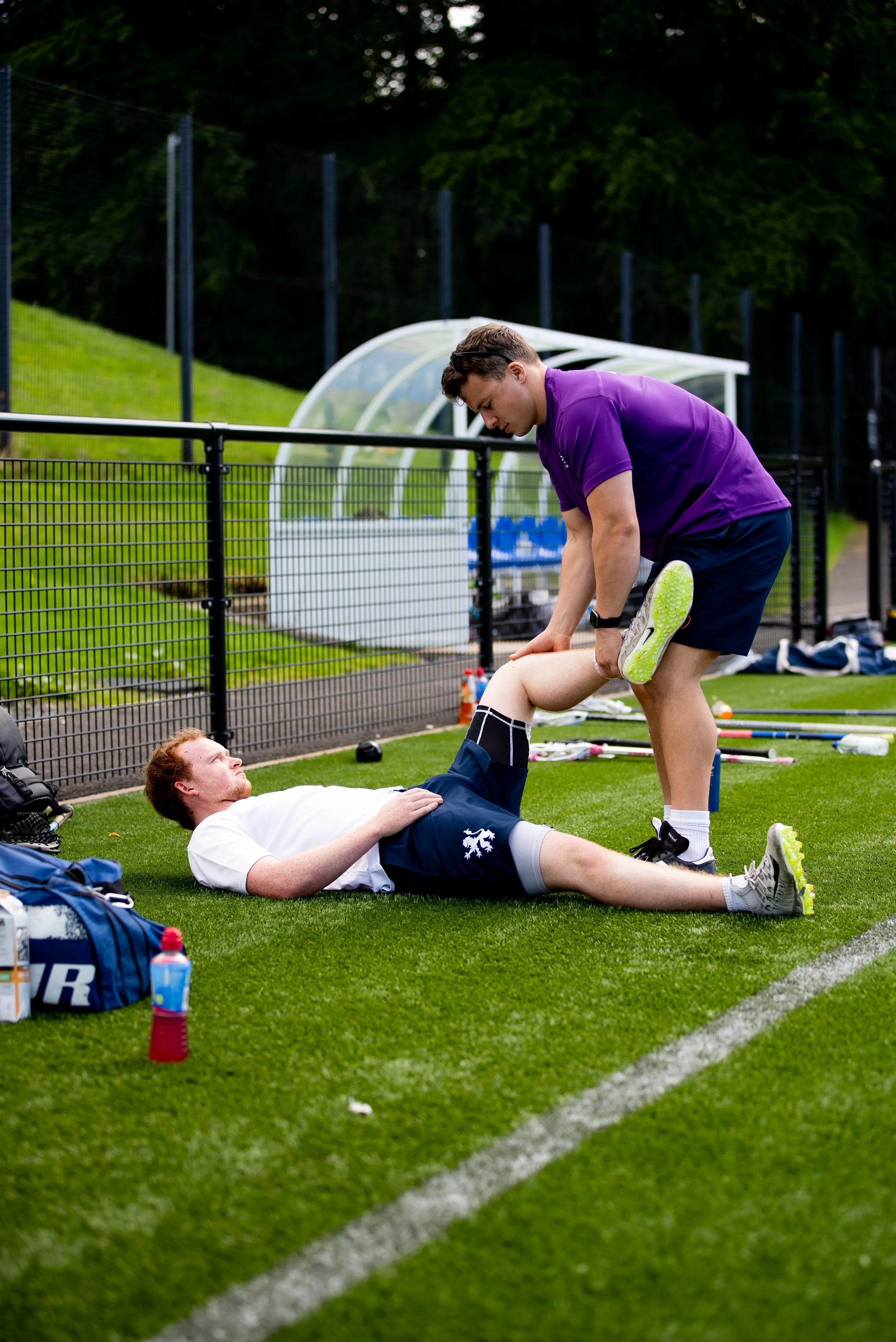
A good number of the athletes I work with arrive by referral - usually at the point where a physio or consultant has cleared them to train, the instruction has changed from "rest" to "build strength", and nobody has explained what that means in practice.
That handover is where people get stuck. Too cautious and you never rebuild. Too eager and you're back where you started.
I'm happy to liaise directly with your physio, consultant or sport coach, and to share testing data with them. If you're a clinician with someone who needs this, get in touch.
ATHLETES I work with
Competitive athletes
Club level through to international. Programming built around a season, with testing to show whether it's working.
Masters athletes
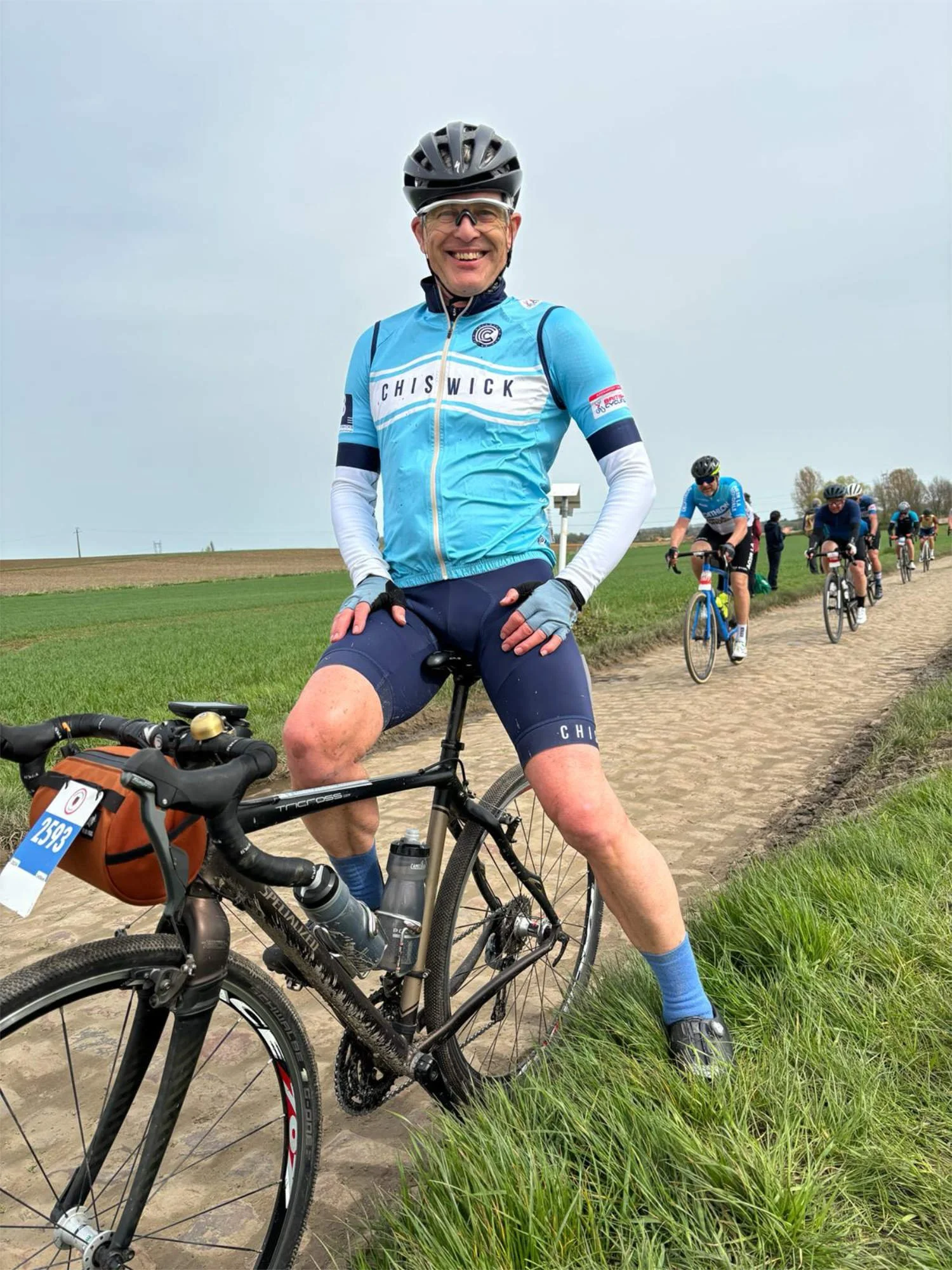
Athletes who've decided slowing down isn't the plan yet. Cyclists, runners and racket players in their fifties and sixties who want to keep pace rather than manage decline.
Young athletes
Those working towards selection, trials or a scholarship; building a physical base that holds up when the level steps up.
Athletes returning to play
After injury or surgery, usually post-clearance, where the problem is no longer pain but capacity.
People who train seriously without competing
They want their programming to reflect their effort rather than another circuit.
What Athletes Say
Strength & Conditioning
"Paul's a very thorough coach. Everything from power output testing to nutritional guidance made the process a whole lot easier. He has been a massive help throughout my preparation and successful selection for the Latvian bobsleigh team."

"His extensive knowledge of S&C and nutrition has really helped me to make gains in my athletic and strength performance on the field. Not only that, but his programmes have noticeably reduced the injuries I would normally accumulate in a season."

"Paul Rose is a one-of-a-kind strength & conditioning coach. Having played International lacrosse for almost two decades, I have accrued a fair amount of tread on the tyres. He has worked diligently and closely with both my athletic and nutrition needs to help me achieve results I thought I couldn't."

"After working with Paul I am stronger, hitting numbers in the gym I've never hit, certainly more explosive, and my general health has improved. The focus on nutrition makes a huge difference — I have much more energy to train and in matches, and my recovery is quicker."

"Paul is a brilliant coach. He listens, guides, and plans fun sessions which have greatly improved my strength and conditioning. I really enjoyed his sessions and always looked forward to the next one. Greatly recommended."
"Paul assisted in helping me get a high school football scholarship in the US. By helping me become a much more physically developed athlete throughout the process of training with him, it allowed me to greatly improve at my sport."
Athletes & Sport
S&C Pricing
Priced separately from general personal training, because it's different work - adjusted to your season and measured against real data. Every path starts with a free 30-minute call. No gym membership needed at either studio.
A full physical profile across two sessions — the performance qualities your sport depends on, and the limiting factors holding them back.
- 2× testing sessions
- Power, speed, strength, conditioning, movement
- Tests chosen for your sport, not off a shelf
- Written profile, yours to keep or share with your coach
- Available on its own — plenty of athletes test here and train elsewhere
Ongoing in-person S&C, periodised around your season rather than written once and repeated.
- 10× in-person sessions
- Sport-specific programming, adjusted in-season
- Testing and re-testing included throughout
- Happy to liaise with your sport coach or physio
- Hybrid free for your first month, booked within 14 days of testing
One session a week with me, plus sport-specific programming and video review for everything in between.
- 1× in-person session/week
- 4+ days/week programming
- Video technique feedback
- Weekly adjustments around your season
- WhatsApp & email support
Training for a sport but not in West London? Online Performance coaching from £159/mo →
Not training for a sport? General personal training pricing →
Not sure which suits you? Book a free call, no obligation.
S&C COACHING FAQ’s
-
Personal training is usually built around how you look or how you feel. S&C is built around what you need to do in a sport, a season, a return to competition. Different goal, different programming, different measure of success.
-
No. Plenty of clients use S&C programming simply because it's a better way to train: structured, progressive, and built around their body and performance metrics.
-
Yes. I'll share testing data and adjust programming around what they're working on, so we can get the best results for you.
-
Strength changes can show in weeks. Sport-specific transfer takes a block or two, typically eight to twelve weeks.
Reduced injury frequency can show across a season, which is why it's the outcome people value last and should value first.
-
Then we train around it. In-season work is about maintaining qualities and managing load, not chasing numbers. Starting mid-season is normal.
-
Yes. Plenty of athletes test here and train elsewhere, including people already working with another coach. You'll get the full written profile either way.
-
No. You train as my client at either studio. Nothing to join, nothing extra to pay.
-
Feel free to send me a message via contact form or email and I’ll get back to you within 24 hours.
IN-PERSON COACHING
LOCATIONS
Both locations are well equipped for our strength work. No crowded gym floors, no waiting for equipment - dedicated coaching studios used exclusively by personal trainers and their clients. Every session focused, attentive, and built around you.
No obligation, for either of us. Just an honest conversation about where you are and where you want to get to.